
Part Two of Two (Click Here to see Part One)
A Challenge
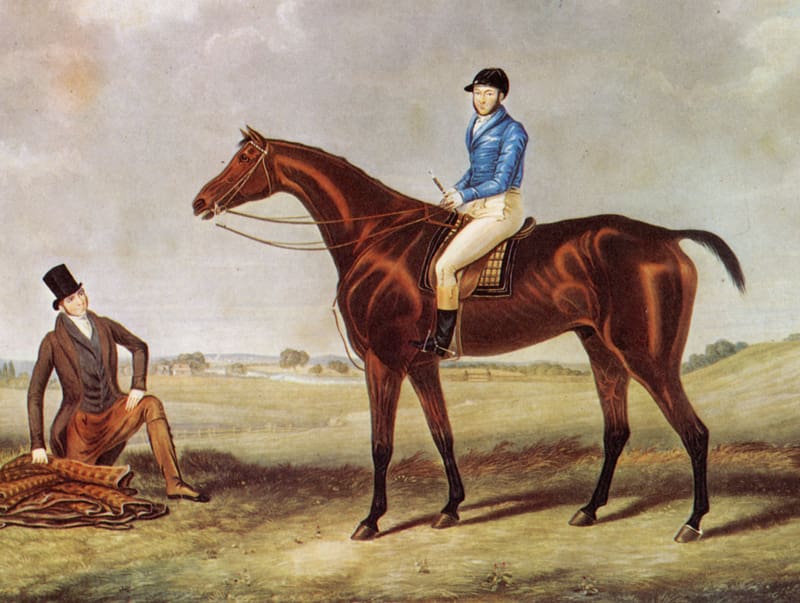
One of the best steeplechasers of the age was a horse named Vivian who just happened to be owned by a Leamington resident Captain Thomas Lamb. Lamb had served with the Bengal Native Infantry in India but had many business interest locally when he settled in Leamington. He owned extensive lime workings at Stockton and ran a stud from Villa Franca his residence in Holly Walk while also acting as commander of the Leamington Squadron of the Warwickshire Yeomanry. Following a steeple chase at Aylesbury, The Marquis of Waterford a noted horse breeder and owner issued a challenge to Capt. Lamb that his horse Cock Robin would beat Lamb’s horse Vivian in a steeplechase and the stake was agreed at 1,000 sovereigns a side, a truly obscene sum of money. On a course at Market Harborough on a fine sunny December day in 1834, the match went ahead and the Marquis riding his own horse followed Vivian across the winning tape and Captain Lamb was handed two £1,000 bank post- bills. The jockey on Vivian was one of the most successful riders of the time, a man named Captain Becher who would be later honoured by having the sixth fence on the Aintree race course named Becher’s Brook. It is said that Becher’s great party trick was to leap onto a mantelpiece from a standing jump.
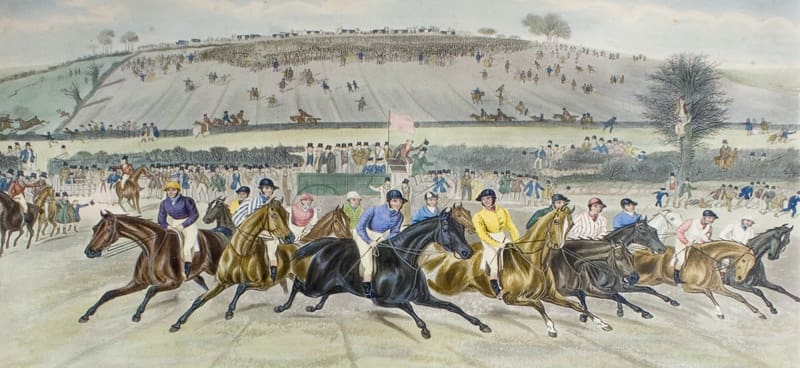
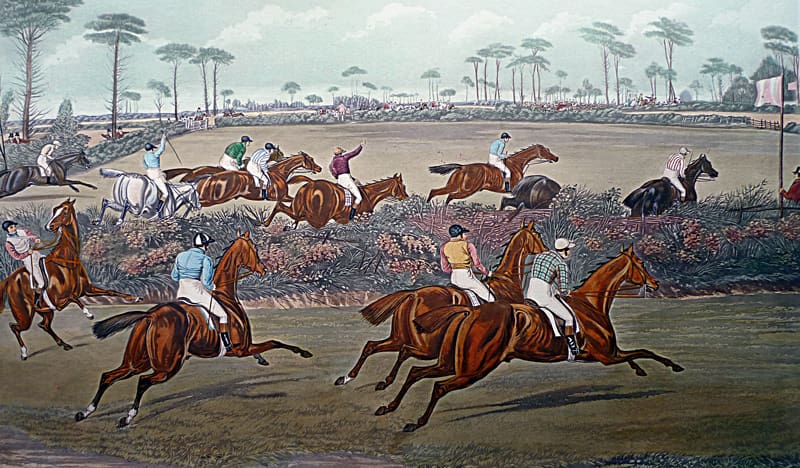
Through the 1830’s and 40’s the Leamington Steeplechases flourished and the number of races increased. What started as a one-day meeting became in time a two-day meeting and by 1846 thirteen races were run. The aristocracy came, as much to be seen as to admire the horseflesh and they generally stayed at The Regent. The ‘sportsmen’ and military types favoured the Bedford and Copps hotels. As a service to their patrons, both the Regent and the Bedford set up betting booths for the duration of the meetings. Several hundred army officers arrived each year with their mounts to contest the Grand Military Steeplechase and many thousands of enthusiastic race-goers flooded into Leamington on race days. The Courier filled its columns with the lists of runners and riders and more importantly the latest betting odds. Magnificent trophies had been commissioned at huge expense and the prize money was much enhanced by donations from local business people and somewhat more contentiously by the Town Commissioners. On the face of it, the steeplechases were an unqualified success but that was a view not shared by everyone, not least by some of Leamington’s most respected and eminent residents.
Dissenting voices
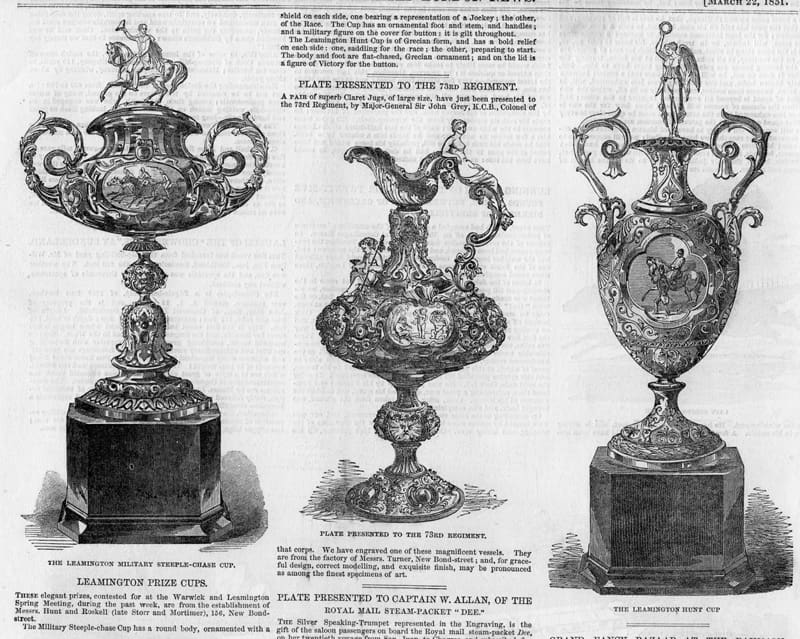
By the late 1840’s there were murmurings about the local steeplechases and the benefits that it was said they brought to the town. For most of the residents it was little more than a once-a-year annoyance which was invariably accompanied by drunkenness, boorish conduct and displays of conspicuous affluence. In 1850 the Courier felt compelled to redress the negative publicity by devoting a whole page of its 20 March 1847 issue to extolling the virtues of the Leamington steeplechases in what was little more than a panegyric. As things turned out, this had a quite opposite outcome to what was intended when the following week there was published in their letters column a devastating riposte from someone signing himself ‘A well wisher’. The letter-writer spoke about the drunken brawls and the dubious attraction of the gaming tables and the concomitant evils that went with what he called ‘this cruel and degenerate pastime’. What really sealed the fate of steeplechasing, not only locally but throughout the land, was the realisation of the cruelty that it involved. Newspapers regularly carried stories of horses being fatally injured or having to be put down after races because of broken limbs. It was clear that the overriding motivation was quite simply money and horses were frequently raced to death to satisfy the owner’s vanity which is what happened to the famous Vivian. Two eminent local doctors, Henry Jephson and John Hitchman, both spoke out against what they saw as a cruel and brutal sport which in their view was pursued for no public ends of popularity or benefit, views that were widely held in the town but which most local people had been too afraid to articulate. Regular local steeplechases came to end in the 1860’s but were revived briefly in 1884 on the old Newbold Hills course. Many of the events that had formerly made up the Leamington Steeplechase programme were thereafter run on Warwick racecourse.
Sources
Leamington Spa Courier (various dates). British Newspaper Archive
Glimpses of our local past. J C Manning. Courier Office. 1895
Annals of the Warwickshire Hunt Mordaunt & Verney. Sampson Lowe, Marston & Co. 1895
History of Royal Leamington Spa. George Morley. undated
Illustrations
All images in this article are from the compilers own archive of original prints & engravings
Alan Griffin 2016